
Pelaires Cabinet. Pelaires Gallery, 2024.

Pelaires Cabinet. Pelaires Gallery, 2024.
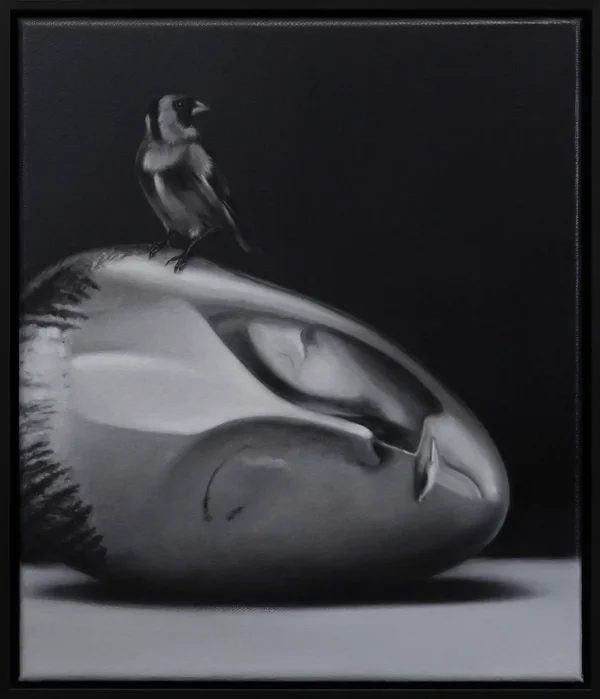

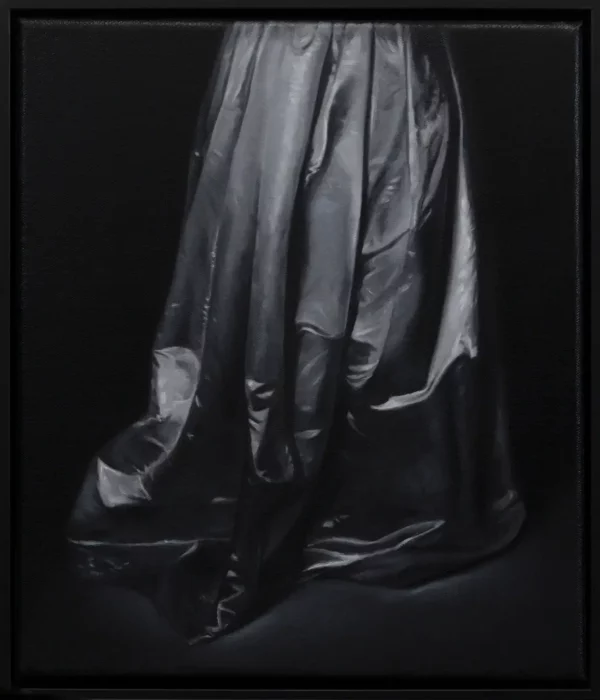
#10
Berlin 2024. Oil on linen 35×30 cm

Pelaires Cabinet. Pelaires Gallery, 2024.

#1
Berlin 2024. Oil on linen 35×30 cm

Pelaires Cabinet. Pelaires Gallery, 2024.

#12
Berlin 2024. Oil on linen 35×30 cm
Pelaires Cabinet. Pelaires Gallery, 2024.
Pelaires Cabinet. Pelaires Gallery, 2024.
#10
Berlin 2024. Oil on linen 35×30 cm
Pelaires Cabinet. Pelaires Gallery, 2024.
#1
Berlin 2024. Oil on linen 35×30 cm
Pelaires Cabinet. Pelaires Gallery, 2024.
#12
Berlin 2024. Oil on linen 35×30 cm
MELANCOLÍAS
Berlin 2024-2025
Galería Pelaires
Palma de Mallorca, 2024
A POLYHEDRAL VISION – Mikel Onandia
‘Images were first made to conjure up the appearances of something that was absent. Gradually it became evident that an image could outlast what it represented; it then showed how something or somebody had once looked —and thus by implication how the subject had once been seen by other people. Later still the specific vision of the image-maker was also recognized as part of the record. An image became a record of how X had seen V. This was the result of an increasing consciousness of individuality, accompanying an increasing awareness of history.’ [Ways of Seeing, John Berger]
This complex exercise we call looking, which takes place within the framework of a visual, linguistic and conceptual hermeneutic circle, conditioned by a tangle of images, stories and experiences, both individual and collective, is one of the central themes of Alain Urrutia’s work, which precisely focuses on the gap between sight and vision, the object and its representation, the image and the concept, following in the tradition of those artists (from René Magritte to Joseph Kosuth) whose plastic work addressed —and completed— what analytical philosophy, with Wittgenstein at its head, tried to explain intellectually, namely the relationship between reality, thought and language (images).
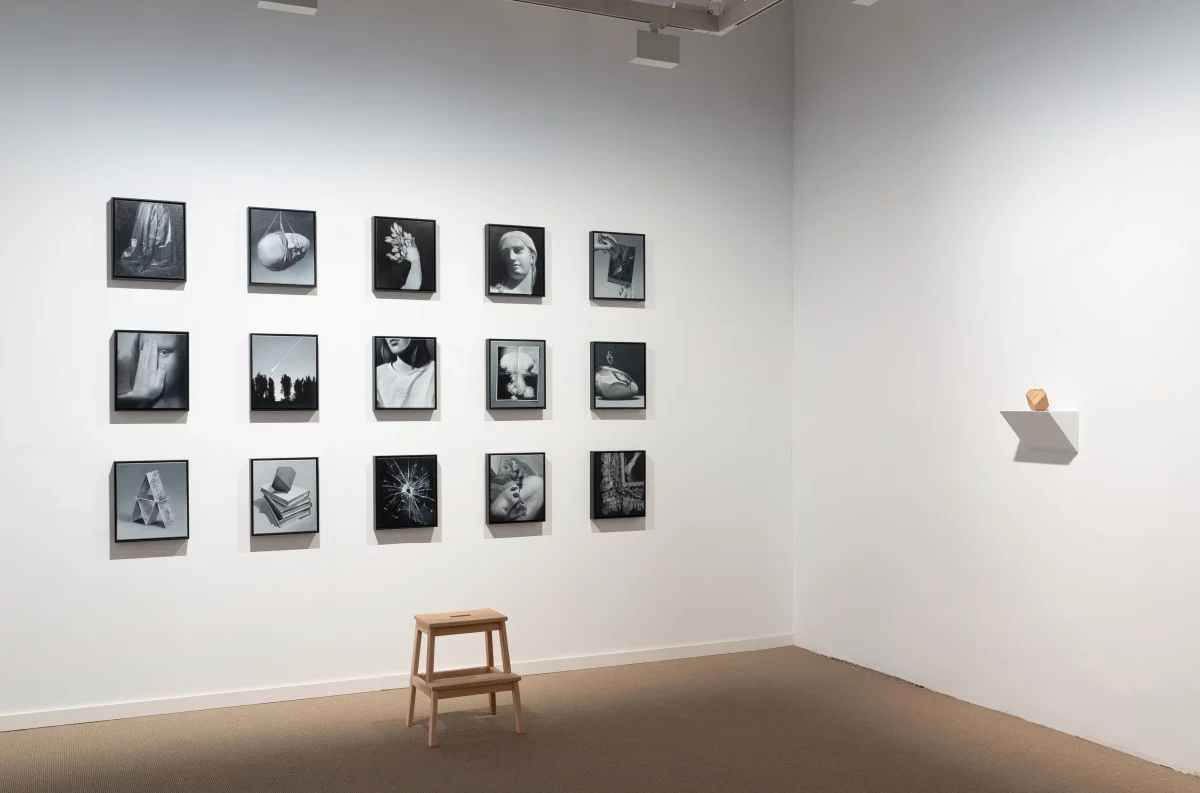
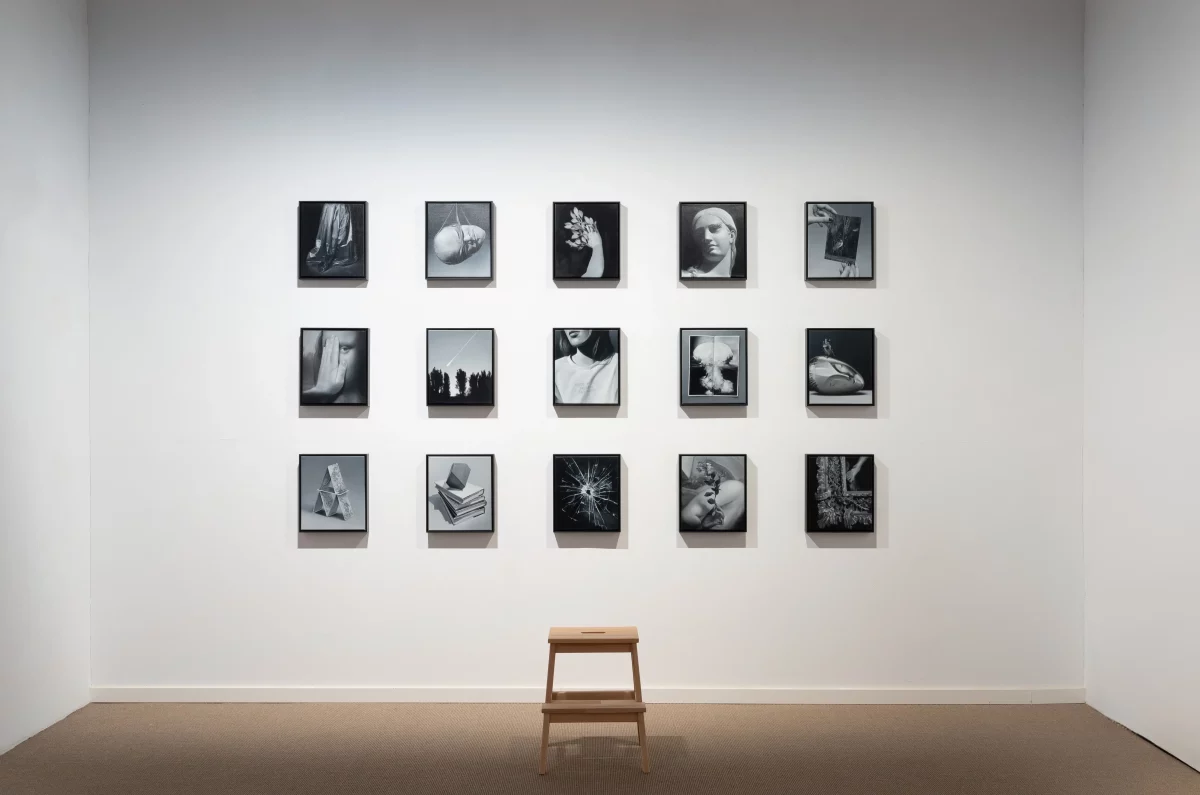
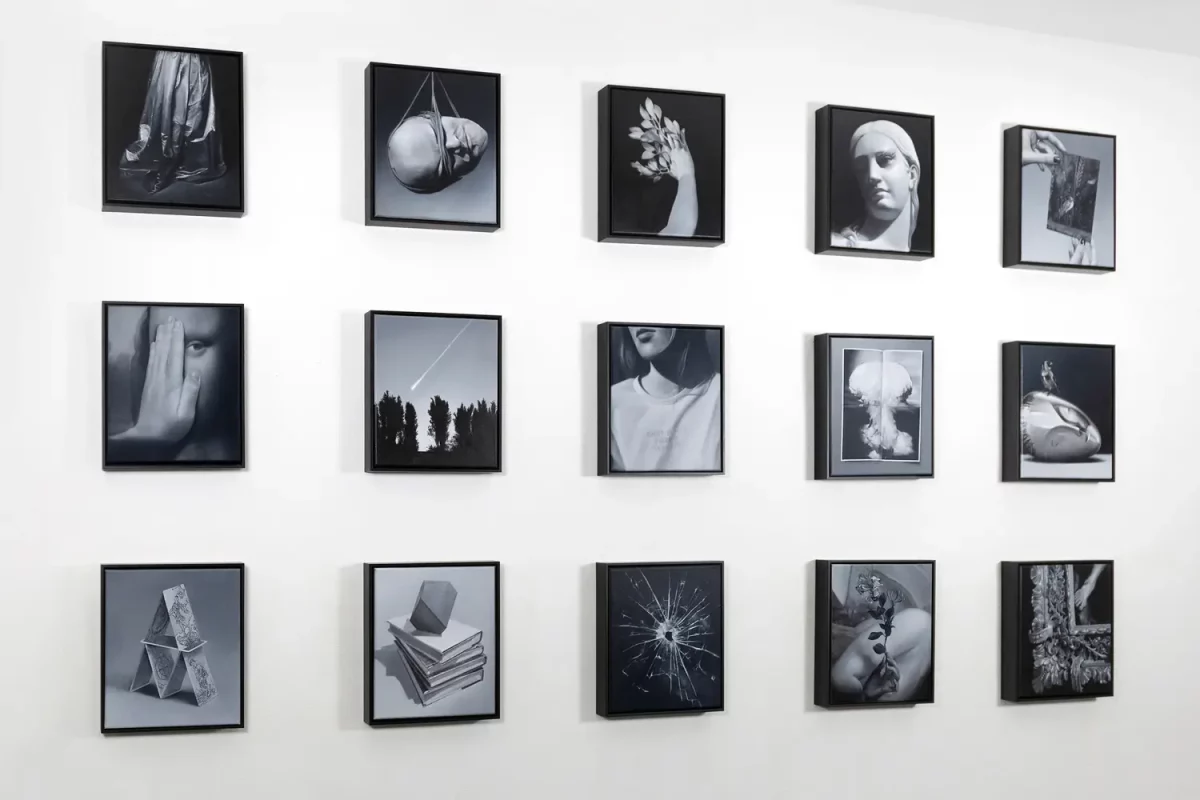
Although at first glance it might seem to be easy to see it in its entirety, Alain Urrutia’s exhibition Melancolías features an installation that requires a slow gaze, so that the time that painting always takes slows down with the small size of the pieces, their quantity and diversity, a priori unconnected to each other, and their mysterious nature. It is a composition of fifteen small paintings that function both individually and as a whole as a large piece, in which the artist achieves a suggestive balance between the singularity of the part and the overall impression of the whole.
By avoiding horizontal arrangement and seriality, as well as their usual separation in favour of the concentration of images, the narrative ceases to be linear to make possible a weaving of connections and layers that suggest skimming reading, different stories —formal, iconographic, poetic— some more or less explicit, others almost private, without a clear and univocal meaning that must be completed by the viewer.
Urrutia’s work does not follow a defined procedure. Instead, one painting leads him to create another, without knowing what the next ones will be. As in previous exhibitions, he presents the show as a visual poetry book, and each piece functions as a poem. In this case, the leitmotiv is melancholy, a feeling of vague, calm and permanent sadness usually linked to an experience or a memory from the past. Since ancient times, according to the classical doctrine of temperaments associated with the humoral theory, and throughout the centuries, especially since the Renaissance, artists have been identified with homo melancholicus, a special being born under the Saturn zodiac sign. This explained their talent and eccentric behaviour, which was associated with the category of genius from the very beginning, an idea that was further explored in the 19th century with Romanticism and approached from psychoanalytical principles in the early 20th century.
However, the melancholy referred to in Urrutia’s installation, in addition to being linked to the state of mind that triggers the creative spark, is also revealed to us as a feeling of nostalgia for a place, an event, a form, a lost world that we cannot identify and which permeates all the images, which, despite being fragmented and ambiguous, even nearly absurd at times, evoke a feeling of —perhaps existential— unease. In any case, melancholy, almost always considered as an abstract thing, as if it were only one, is in this case multiplied. As a result, it leads us to a diverse and open understanding in which the melancholic states, as many as the pieces that make up Urrutia’s installation, expand and interrelate without any solution of continuity.
After spending almost twenty-five years buried, a large head of Lenin travels through the air, while a small bird perches on Brancusi’s sleeping muse. Between different interweaving gazes, we find close-ups or fragments of works of art, landscapes, books, dress pleats, frames, political slogans, and house of cards made from tarot cards or explosions, more or less recognisable, sometimes facing up or facing down, which implies a certain strangeness. The intertextuality is truly profuse beyond the obvious. And in Urrutia’s work we find at first glance Leonardo and Edward John Poynter, but also, if we look closely, Kafka and Ribera, Kubrick and Buzzati.
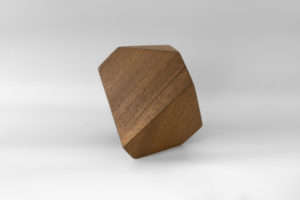
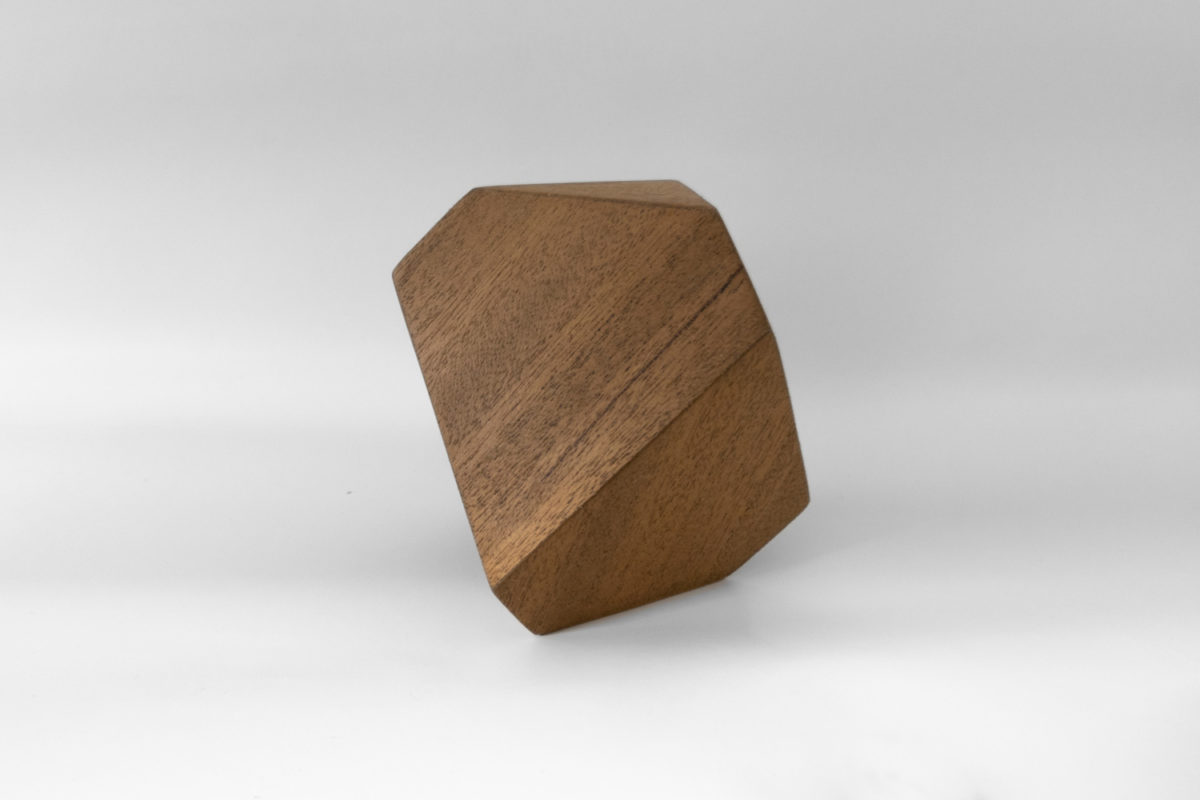
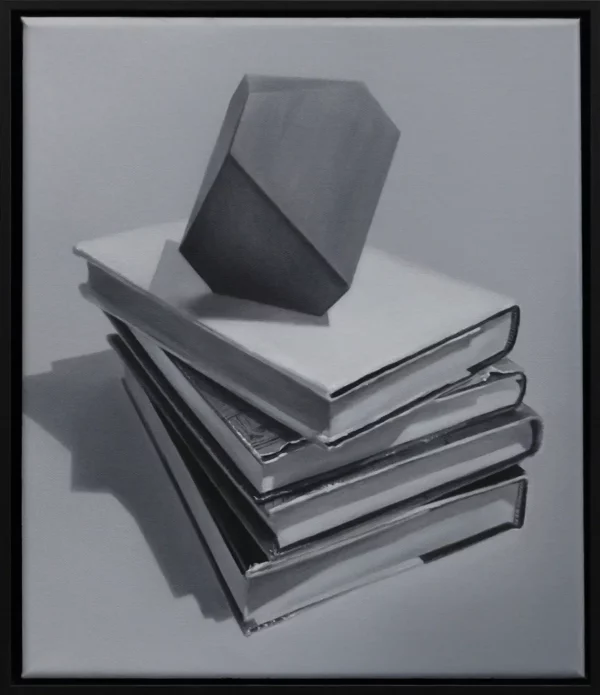
It is worth noting the small wooden sculpture located next to the paintings. It is a three-dimensional reproduction of the geometric piece that Albrecht Dürer included in his complexly symbolic engraving dedicated to melancholy in the early 16th century. The wooden piece functions as a symbolic compendium not only of the multiplicity of meanings of the mural and its consequent polyhedral gaze, but also of the artist’s interest in exploring the intricacies of the art of the past as a real object that provides, from the outside, a real scale and dimension to the totality of the images.
Urrutia’s unique language, which alludes both to the grisaille technique and to the black and white of the world of cinema and historical photography, giving it a certain silent and timeless nature, shows in his latest work a certain evolution with an ever-greater softness of the lines and a subtle gradation of shades close to sfumato, not to mention the outstanding gentleness in the treatment of the objects that highlights their enigmatic character. In this sense, it should be underlined that Alain Urrutia is not merely a creator of images. His work is an example of the best tradition of painting history. It is in this setting and with the very tools of pictorial language that his work finds its true value, where it unfolds a level of execution and consistency to which photographic reproduction never does justice.
UNA MIRADA POLIÉDRICA – Mikel Onandia
‘Las imágenes se hicieron al principio para evocar algo ausente. Gradualmente se fue comprendiendo que una imagen podía sobrevivir al objeto representado; por tanto, podría mostrar el aspecto que había tenido algo o alguien, y por implicación cómo lo habían visto otras personas. Posteriormente se reconoció que la visión específica del hacedor de imágenes formaba parte también de lo registrado. Y así, una imagen se convirtió en un registro del modo en que X había visto a Y. Esto fue el resultado de una creciente conciencia de la individualidad, acompañada de una creciente conciencia de la historia.’ [Modos de ver, John Berger]
Ese complejo ejercicio que llamamos mirar que se da en el marco de un círculo hermenéutico visual, lingüístico y conceptual, condicionado por una maraña de imágenes, relatos y vivencias, individuales y colectivas, resulta uno de los ejes centrales del trabajo de Alain Urrutia, quien justamente pone el foco en la brecha entre la vista y la mirada, el objeto y su representación, la imagen y el concepto, siguiendo la tradición de aquellos artistas que, de René Magritte a Joseph Kosuth, abordaron –y completaron– mediante su trabajo plástico lo que la filosofía analítica, con Wittgenstein a la cabeza, intentó explicar intelectualmente, a saber, la relación entre realidad, pensamiento y lenguaje (imágenes).
Si bien en un primer golpe de vista pareciera que se avista fácilmente en su totalidad, la muestra Melancolías de Alain Urrutia presenta una instalación que exige de una mirada pausada, de modo que el tiempo que necesita siempre la pintura se ralentiza, debido al reducido tamaño de las piezas, su cantidad y diversidad, a priori inconexas entre sí, y a su naturaleza misteriosa. Se trata de una composición de quince pequeños cuadros que funcionan, tanto de manera individual como en su totalidad como una gran pieza, en la que el artista obtiene un sugerente equilibrio entre la singularidad de la parte y la impresión general del todo.
Al evitar la disposición horizontal y la serialidad, así como su separación habitual en favor de la concentración de imágenes, la narratividad deja de ser lineal para posibilitar un tejido de conexiones, de estratos que sugieren lecturas en diagonal, distintos relatos –formales, iconográficos, poéticos–, más o menos explícitos algunos, casi privados otros, sin un significado claro y unívoco, que deben ser completados por el espectador.
El trabajo de Urrutia no responde a un procedimiento definido, sino que un cuadro le lleva a crear otro, sin llegar a saber cuales serán los siguientes. Así, al igual que en exposiciones anteriores, plantea la muestra como un poemario visual, y cada pieza funciona como un poema. El leitmotiv, en este caso, es la melancolía, ese sentimiento de tristeza vaga, sosegada y permanente vinculada habitualmente a una vivencia o un recuerdo del pasado. Ya desde la Antigüedad, según la doctrina clásica de los temperamentos en relación con la teoría de los humores, y a lo largo de los siglos, en especial a partir del Renacimiento, se ha identificado al artista con el homo melancholicus, ese ser especial nacido bajo el signo de Saturno, lo que explicaba su talento y conducta excéntrica, ya desde los inicios asociada a la categoría de genio, que fue ahondada en el siglo XIX con el Romanticismo y abordada desde postulados psicoanalíticos a comienzos del siglo XX.
Sin embargo, la melancolía a la que hace referencia la instalación de Urrutia, además de vinculada al estado de ánimo que facilita el acto creador, se nos muestra igualmente como un sentimiento de nostalgia por un lugar, un acontecimiento, una forma, un mundo perdido que no sabemos identificar y empapa la totalidad de las imágenes, que, a pesar de su fragmentación y ambigüedad, rayanas al absurdo en ocasiones, evocan una sensación, quizá existencial, de desasosiego. En todo caso, la melancolía, casi siempre considerada en abstracto, como si fuera una sola, es en este caso multiplicada, lo que nos lleva a una concepción diversa y abierta, en la que los estados melancólicos, tantos como piezas componen la instalación de Urrutia, se incrementan e interrelacionan sin solución de continuidad.
Tras pasar casi veinticinco años enterrada, una gran cabeza de Lenin viaja por el aire, mientras un pequeño pájaro se posa sobre la musa durmiente de Brancusi. Entre distintas miradas que se entrecruzan nos encontramos con primeros planos o fragmentos de obra artísticas, paisajes, libros, pliegues de vestidos, marcos, lemas políticos, castillos de naipes realizados con cartas de tarot o explosiones, más o menos reconocibles, en ocasiones giradas o tapadas, lo que implica cierto extrañamiento. La intertextualidad resulta verdaderamente profusa más allá de lo evidente, y es que en la obra de Urrutia nos encontramos en un primer vistazo a Leonardo y Edward John Poynter, pero también, tras una observación más detenida, a Kafka y Ribera, a Kubrick o a Buzzati.
Cabe destacar la colocación, junto a las pinturas, de una pequeña escultura de madera; se trata de una reproducción tridimensional de la pieza geométrica que Alberto Durero incluyó en su grabado de complejo simbolismo dedicado a la melancolía a comienzos del siglo XVI, que funciona, además de como un compendio simbólico de la multiplicidad de significados del mural y su consiguiente mirada poliédrica, así como del interés del artista para escudriñar los entresijos del arte del pasado, cual objeto real que aporta, desde el exterior, una escala y dimensión real a la totalidad de las imágenes.
El identificable lenguaje de Urrutia, que alude tanto a la técnica grisalla como al blanco y negro del mundo del cine y de la fotografía histórica, lo que le confiere cierta naturaleza silenciosa y atemporal, muestra en su último trabajo cierta evolución hacia una cada vez mayor suavidad de las líneas en favor de una sutil gradación de tonos cercana al sfumato, con una destacada delicadeza en el tratamiento de los objetos, lo que ahonda en su carácter enigmático. En ese sentido, cabe subrayar que Alain Urrutia no es un mero creador de imágenes, sino que su obra cabe situarla en la mejor tradición de la historia de la pintura, en cuyo escenario y en las propias herramientas del lenguaje pictórico obtiene su verdadero valor, de una ejecución y consistencia a la que la reproducción fotográfica nunca le hace justicia.